WhisperAI vs. Muse Voice Transcribe: Why WhisperAI Wins for Developers and Users
Meta's Muse Voice Transcribe is fast and cheap at $0.18 an hour. It also caps pre-recorded files at 10 minutes, streaming sessions at 60 minutes, and ships no word timestamps. Here is the full comparison with WhisperAI.
Meta shipped Muse Voice Transcribe on September 1, 2026, and the headline numbers are genuinely good: a 3.1% streaming word error rate, a 17.5% average diarization error rate, and a price of $0.18 per hour of audio. If you are choosing a speech-to-text stack this quarter, it belongs on your shortlist.
It also belongs in context. Muse is a model. WhisperAI is a product and an API built for everything that happens after the model returns text: long files, mixed languages, speaker-attributed transcripts you can search, edit, export, and hand to a client. Those are different problems, and the gap shows up quickly once you move past a demo.
The short answer
Choose Muse Voice Transcribe if you need the lowest-latency streaming dictation for short sessions and you are comfortable building everything around it yourself. Choose WhisperAI if you need to transcribe real files, in real languages, at real length, and ship a finished feature rather than a prototype.
Head-to-head at a glance
| What matters | WhisperAI | Muse Voice Transcribe |
|---|---|---|
| Max pre-recorded file | 5 GB or 10 hours per request | 32 MB or 10 minutes per request |
| Streaming session length | No session cap | 60 minutes per session |
| Pre-recorded languages | 100+, automatically detected | 70+ trained, 25 validated |
| Language identification | Included | Not provided |
| Real-time languages | 18, with native code-switching | 25 validated, code-switching supported |
| Speaker labels | Included, aligned to words | Included, 20+ speakers, tag emitted at end of chunk |
| Word-level timestamps | Included | Not provided |
| Confidence scores | Included | Not provided |
| Translation | 87 target languages, from $0.0005 per minute | Not offered |
| Concurrency | Up to 250 concurrent requests | Not published |
| Webhooks | Included | Not offered |
| End-user product | Full workspace: editor, exports, summaries, cloud sync | API, Meta AI for Mac dictation, Muse Code |
| Pre-recorded price | $0.01 per minute, or $0.006 on Developer | $0.003 per minute ($0.18 per hour) |
Where Muse Voice Transcribe is strong
Credit where it is due. Muse is an autoregressive multimodal model that processes audio in 80ms chunks and decides, token by token, whether to keep listening or start writing. Meta calls this adaptive delay, and it lets the model spend more time on hard words and less on easy ones. Streaming recognition, diarization, and endpointing all run in a single pass rather than as three systems stitched together, which is a cleaner architecture than most of the field.
If your use case is push-to-talk dictation, or a voice agent that needs the first token back as fast as physically possible, Muse is a serious option. We would rather say that plainly than pretend otherwise. The question is what happens when your audio stops looking like a demo.
The ten-minute ceiling
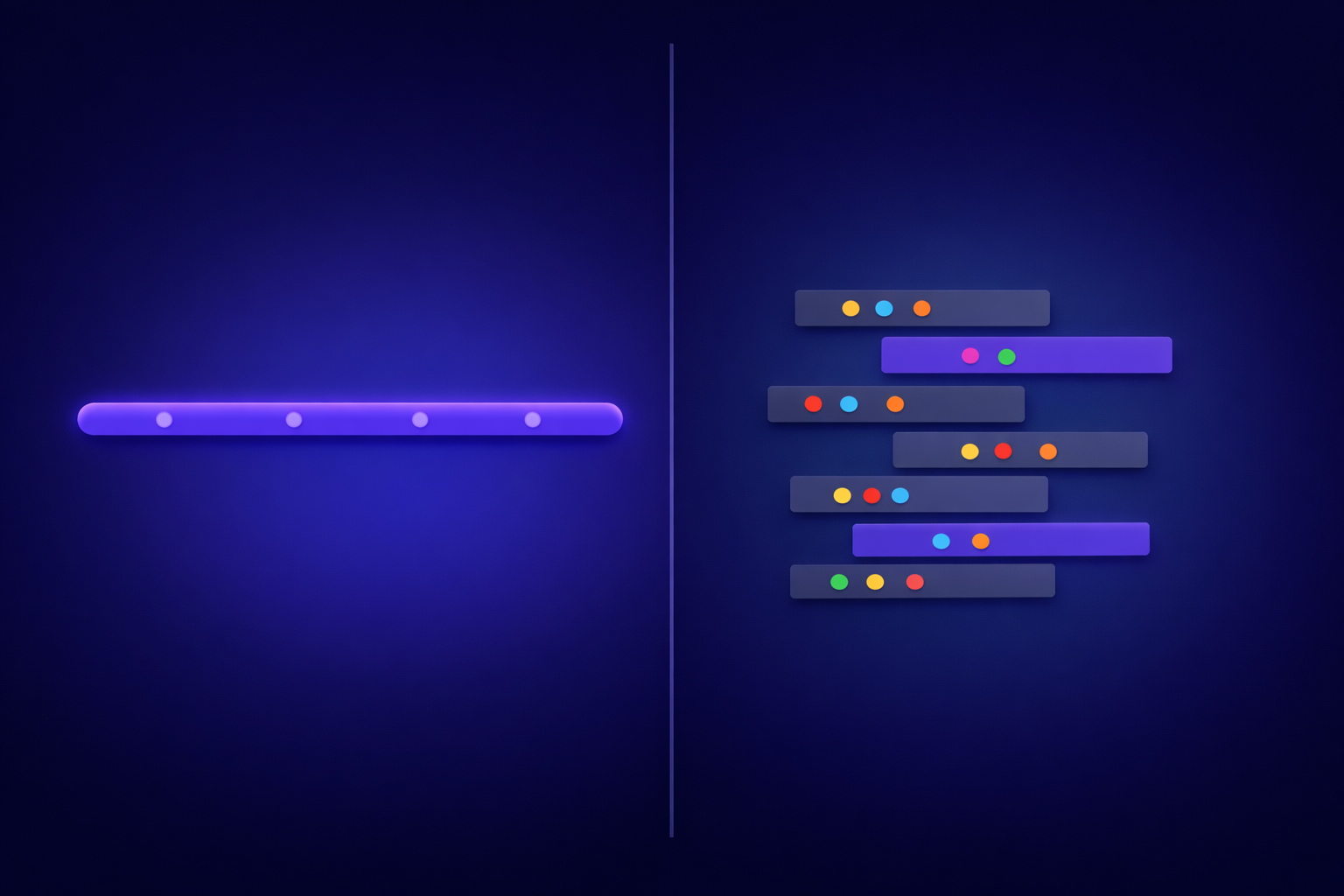
This is the limit that reshapes your architecture. Muse caps pre-recorded requests at 32 MB or 10 minutes. A one-hour board call is not one request, it is six, plus the chunking logic you write, plus the stitching logic, plus the reconciliation when a sentence lands across a boundary and a speaker gets renamed halfway through the meeting.
Speaker continuity is the part that hurts most. Diarization labels are assigned per request, so Speaker A in chunk one has no guaranteed relationship to Speaker A in chunk two. You end up building a voice-matching layer on top of a model you chose so you would not have to build things.
WhisperAI accepts a single audio or video file up to 5 GB or 10 hours. A full-day conference, a four-hour deposition, a semester lecture: one request, one transcript, one consistent set of speakers. The 5 GB ceiling covers video natively, so you are not extracting audio tracks first.
Streaming has its own wall. Muse limits each real-time session to 60 minutes. All-hands meetings, court proceedings, and long-form podcasts routinely run past that, which means reconnection logic, a gap at the seam, and speaker identities that reset at exactly the moment your users are paying attention.
Language coverage is not the same as language support
Meta trained Muse on more than 70 languages but validates only 25, and recommends sticking to those 25 in the initial release. That is an honest disclosure on Meta's part, and it is also a real constraint. "Support" that has not been measured is a support ticket waiting to happen.
There is a subtler gap underneath it: Muse does not return language identification. You get text, but not a machine-readable answer to which language was spoken. If you route transcripts to region-specific reviewers, enforce data residency by language, run per-language analytics, or simply need to know whether to invoke a translation step, you are now guessing or bolting on a separate classifier.
WhisperAI detects and transcribes across more than 100 pre-recorded languages automatically, and returns 18 languages in real time with code-switching handled natively inside the model rather than as a post-process. On code-switched audio across five language pairs, our async engine benchmarks at 7.69% normalized word error rate. Muse supports language mixing on paper, but in real-world conversational audio, where speakers switch mid-clause and accents drift, that support degrades faster than the marketing suggests.
Diarization: who spoke, and when do you find out
Muse marks a potential speaker change immediately, but it does not commit to who that speaker is until the end of the chunk. For a batch transcript that is invisible. For anything live, it is finalization latency: the words appear, then hang unattributed while the model decides whose they were. In normal conversation, with short turns and interruptions, it also misses switches outright.
The measurement matters as much as the mechanism. Meta reports a 17.5% diarization error rate, and DER is the field's traditional metric. DER compares time regions, asking who was speaking when. It never looks at the words. A transcript can post a strong DER and still credit the wrong sentence to the wrong person, because DER penalizes things like unlabeled laughter and rewards loose segment boundaries. cpWER measures what your users actually see, which is who said what. If you are comparing diarization claims across vendors, ask which metric produced the number before you compare the numbers.
20+ speakers is a ceiling, not a guarantee
Muse advertises diarization for more than 20 speakers, and Meta's eight-speaker demo is impressive. Field reports have been more mixed, particularly on short turns, crosstalk, and rapid back-and-forth. Test it on your own audio before you design a product around the number.
No word timestamps, no confidence scores
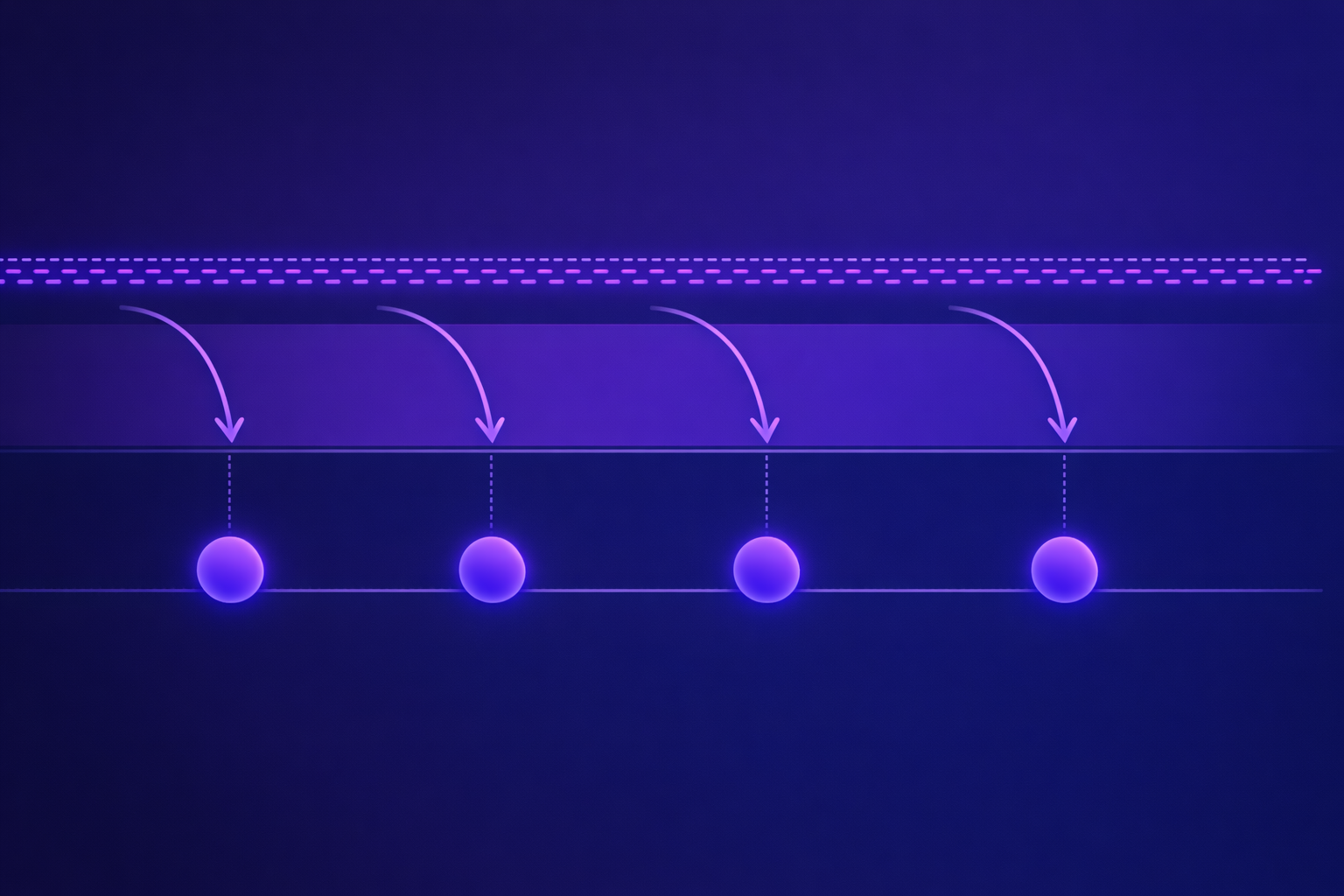
Muse does not return word-level timestamps or per-word confidence. These sound like details until you list what they unlock: SRT and VTT captions that stay in sync, clip-to-quote for social video, search results that jump to the exact moment, review queues that surface only low-confidence passages to a human, and redaction that removes a name without guessing at its position.
You cannot reconstruct any of it from a plain transcript. Forced alignment as a second pass costs another model, another dependency, and another source of drift. WhisperAI returns word-level timestamps and confidence on every transcript, in the same response, at no extra charge.
Cheaper per hour, more expensive to ship
Let us do the math honestly. Muse costs $0.18 per hour of processed audio. WhisperAI pre-recorded transcription is $0.01 per minute pay as you go, which is $0.60 per hour, or $0.006 per minute on the Developer plan, which is $0.36 per hour with 10,000 minutes included in the $99 monthly fee. On raw audio-minutes, Meta is cheaper. We are not going to argue otherwise.
The line item is not the cost, though. At 1,000 hours a month the difference between the two is roughly $180. One engineer-week costs more than that, and Muse asks for several: a chunker for the 10-minute limit, a stitcher for the transcripts, speaker reconciliation across chunk boundaries, reconnection handling for the 60-minute streaming cap, a language classifier to replace the missing language ID, a forced-alignment pass to recover timestamps, and a polling loop with its own job queue because there are no webhooks. That is not a sprint. That is a service you now own and maintain.
All of that is included in the WhisperAI rate, along with up to 250 concurrent requests, speaker labels, and translation into 87 languages from $0.0005 per minute. Here is a complete integration.
# Start a transcript from any public audio URL
curl https://api.whisperai.com/v1/transcript \
  -H "Authorization: wai_your_api_key_here" \
  -H "Content-Type: application/json" \
  -d '{"audio_url":"https://example.com/board-call.mp3","speaker_labels":true}'

# 200 OK
# { "id": "tr_8fK2...", "status": "queued" }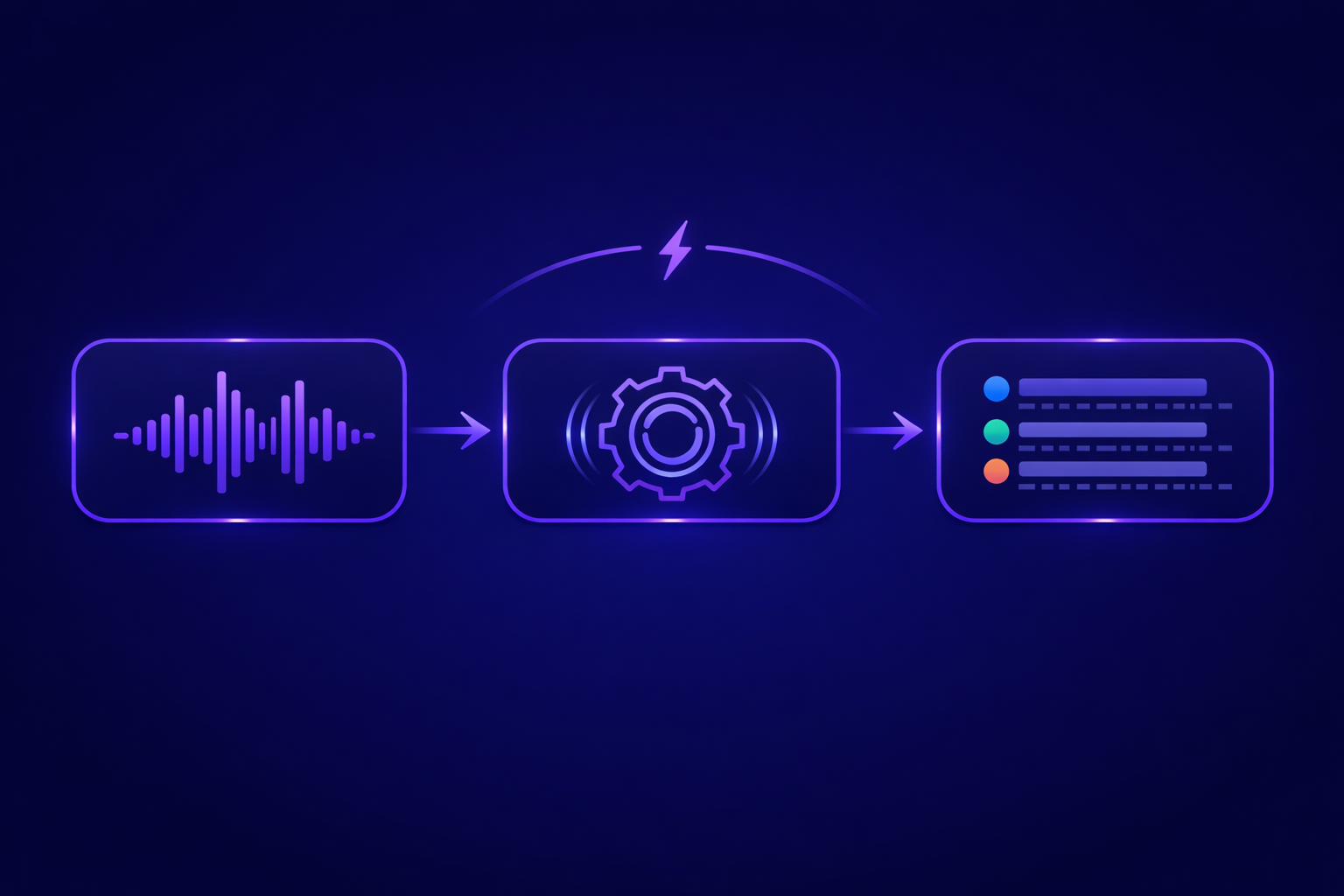
One request for a three-hour recording. Speaker labels on. Poll the transcript endpoint or let a webhook tell you when it is done, then pull sentences, subtitles, or the full structured JSON. Nothing to chunk, nothing to reassemble.
Why developers pick WhisperAI
- One file up to 5 GB or 10 hours per request, audio or video, no chunking or stitching.
- Word-level timestamps and confidence scores on every response.
- Speaker labels aligned to words, and preserved through translation.
- Webhooks, so async jobs never need a polling loop you maintain.
- Up to 250 concurrent requests on both pay as you go and Developer.
- 100+ pre-recorded languages with automatic detection and identification, 18 in real time.
- Contextual prompting, so you can prime the model with domain terms, product names, and prior context.
- Encrypted in transit and at rest, revocable keys, transcripts deletable through the API, never used for training.
Why everyone else picks WhisperAI
There is a category of user this comparison usually forgets: the paralegal with a deposition, the producer with a four-person panel, the clinician with a day of consultations. For them, Muse is not really an option. It ships as a model API, plus dictation inside Meta AI for Mac and Muse Code. There is no workspace to upload a recording to, no editor, no export, no shared library. Someone has to build that first.
WhisperAI is that product already. Drop in a file, pick a preset for your field, and get back a transcript you can actually use. Verbatim for depositions, filler stripped for podcasts, unclear audio flagged rather than guessed. Teach it up to 100 custom terms per file so client names, drug names, and case numbers come out right. Name your speakers instead of accepting Speaker 1 and Speaker 2. Then export to PDF, DOCX, TXT, or SRT, generate an AI summary, or connect Google Drive and have new recordings transcribed automatically as they land.
Business Pro is unlimited at $24.99 a month, with no minute caps and no overage invoices. For teams that record constantly, predictable billing turns out to matter more than a per-hour rate.
The verdict
Muse Voice Transcribe is a strong model at an aggressive price, and Meta deserves the attention it is getting for the streaming architecture. If you need sub-second dictation for short sessions and you have engineers to spare, try it.
But most transcription work is not ten-minute clips in validated languages with no need for timestamps. It is long recordings, messy audio, mixed languages, and downstream systems that expect structure. WhisperAI is built for that, and it arrives as something you can ship on Monday rather than something you finish building in Q2.
Frequently asked questions
Is Muse Voice Transcribe more accurate than WhisperAI?
On clean streaming English, Meta reports a 3.1% word error rate, which is excellent and currently ranks first on Artificial Analysis. Accuracy on a benchmark is not the same as accuracy on your audio, though. Muse validates only 25 of its 70+ languages, returns no confidence scores to tell you where it was unsure, and its diarization delays speaker attribution to the end of each chunk. Test both on your own recordings, in your own languages, at your own file lengths.
Can Muse Voice Transcribe handle a one-hour meeting?
Not in a single pre-recorded request. The API caps at 32 MB or 10 minutes, so an hour of audio has to be split into at least six chunks and reassembled, with speaker labels reconciled across the boundaries. Live streaming sessions are capped at 60 minutes. WhisperAI accepts up to 5 GB or 10 hours in one request and places no cap on streaming session length.
Does WhisperAI cost more than Muse Voice Transcribe?
Per audio-hour, yes. Muse is $0.18 per hour. WhisperAI is $0.60 per hour pay as you go, or $0.36 per hour for usage beyond the 10,000 minutes included with the $99 Developer plan. Total cost is a different question: WhisperAI includes word timestamps, confidence scores, language identification, webhooks, 250 concurrent requests, and large-file handling that you would otherwise build and maintain yourself.
Does Muse Voice Transcribe return word-level timestamps?
No. Muse provides neither word-level timestamps nor per-word confidence scores. That rules out accurate captions, clip-to-quote workflows, jump-to-moment search, and confidence-based human review unless you add a separate forced-alignment step. WhisperAI returns both on every transcript.
Which is better for a voice agent?
Muse has a real latency advantage for short, single-speaker turns, and its built-in endpointing is well suited to turn-taking. WhisperAI is the better fit once the agent has to run longer than 60 minutes, identify which language a caller is speaking, attribute words to multiple participants reliably, or feed timestamps into downstream analytics. Realtime WhisperAI transcription is $0.01667 per minute across 18 languages.
Can I translate transcripts with either service?
Muse does not offer translation. WhisperAI translates any completed transcript into 87 target languages at $0.001 per minute per language, or $0.0005 on the Developer plan, and preserves speaker labels in the translated output when they were enabled on the source transcript.
Eman K